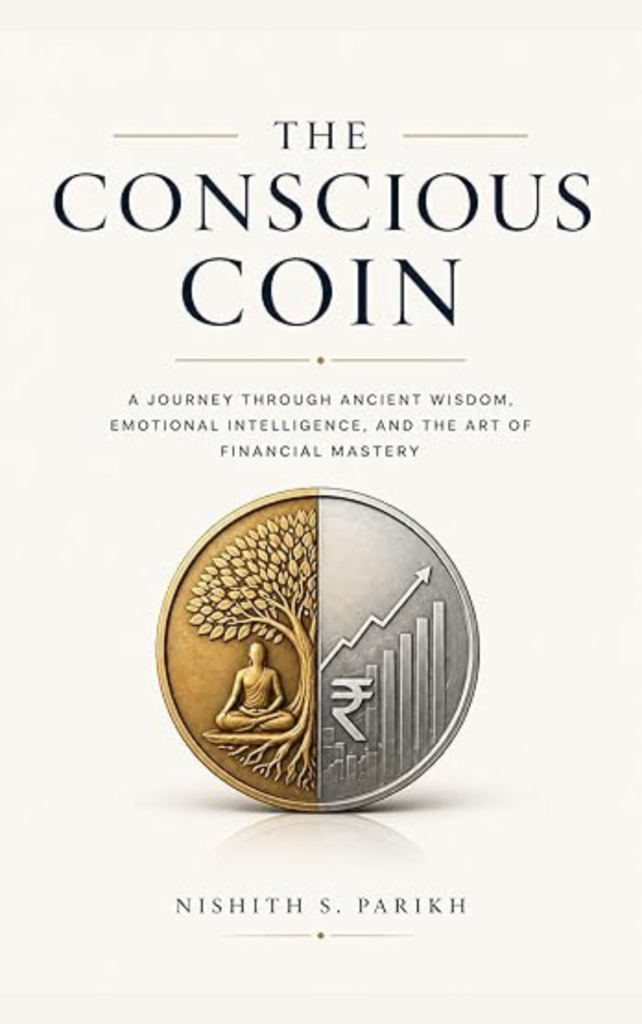
The Conscious Coin is a practical and inspiring guide that bridges the wisdom of the past with the tools of the future to help readers take full control of their financial lives.
The book begins by exploring ancient Indian practices of wealth and money management, uncovering timeless lessons from the Vedas, Hindu mythology, and the teachings of visionaries like Chanakya. These principles of saving, investing, and ethical stewardship of wealth are then woven into modern strategies for building lasting financial security.
Moving into today’s world, the book introduces data science, business intelligence, and financial analytics as powerful tools to understand and manage personal money flows. Readers learn how to design a personal financial model, track net worth, and use data visualization to make smarter decisions.
With clear explanations of financial products—from insurance and mutual funds to gold and real estate—the book equips readers with actionable strategies for both short-term stability and long-term growth. Alongside, it emphasizes mindset: developing discipline, emotional intelligence, and the “millionaire mentality” that blends practicality with purpose.
Accessible and comprehensive, The Conscious Coin is for anyone—from young professionals to seasoned earners—who wants to stop drifting financially and start acting like the CFO of their own life. It’s more than just a finance book; it’s a roadmap to freedom, prosperity, and a life of balance between material success and timeless wisdom.
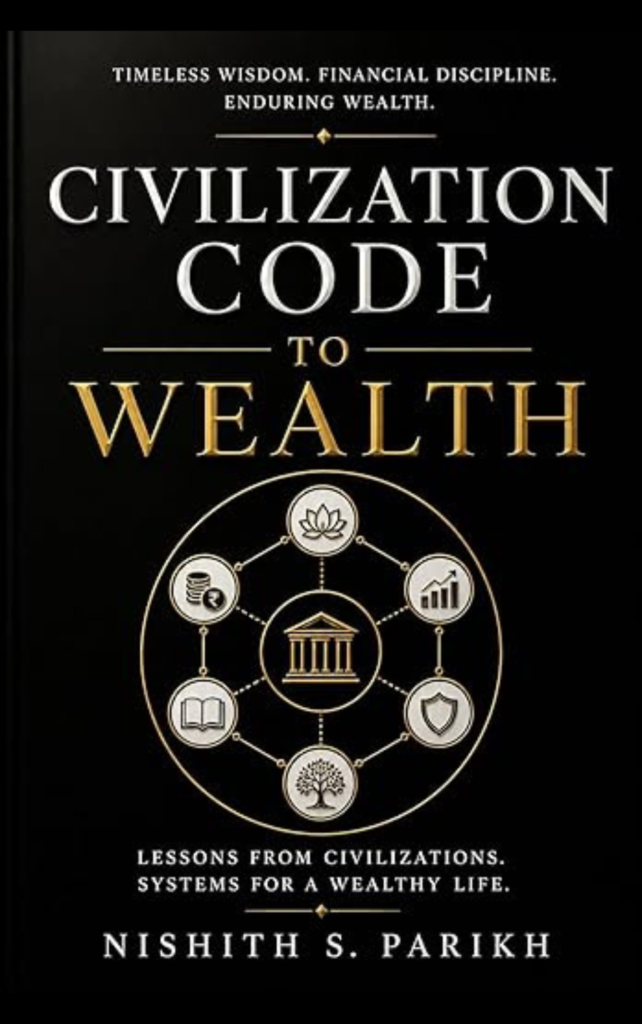 Civilization Code to Wealth moves from consciousness to construction. It asks a different question: not what money is, but how wealth is created—consistently, predictably, and across time.
To answer that, I did not begin with modern finance. I began with history.
Long before stock markets, digital assets, or global economies, civilizations were already solving the problem of wealth. They learned to produce surplus, to store resources, to trade across distances, to invest in systems, and to expand through innovation. These were not isolated discoveries. They were patterns.
The same patterns appear again in modern economies. And, more importantly, they can be applied at the level of personal finance.
This book is built on a simple premise:
The principles that created prosperous civilizations can create financially strong individuals.